For decades, healthcare innovation has been viewed through a hyper-clinical lens. We look at the multi-million dollar oncology equipment, the next generation of pharmaceuticals, and the complex algorithms predicting patient outcomes. Yet, a silent operational crisis has quietly undermined these medical breakthroughs for years. It is a failure not of science, but of simple geography: if a patient cannot physically get to their provider, the most advanced treatment in the world is effectively useless.
Today, Non-Emergency Medical Transportation (NEMT) has broken out of its legacy perception as a specialized taxi service. It has evolved into a formalized clinical intervention. Across the continuum of care, NEMT is actively reshaping the healthcare industry, lowering systemic expenditures, and accelerating the physical recovery path of vulnerable patients.
The Strategic Shift: 5 Reasons NEMT is Revolutionizing Healthcare
When analyzing the mechanics of hospital readmissions and chronic disease management, the data points to a stark reality: missed appointments directly dictate disease progression.
NEMT has become a critical preventative firewall through several distinct mechanisms:
1. Breaking the Hospital Readmission Cycle
The first 30 days following an inpatient hospital discharge represent a high-stakes window for patient recovery. Surgical wounds must be monitored, physical therapy initiated, and specialized medications titrated. When a patient misses these early follow ups due to a lack of transit, their condition frequently destabilizes, triggering an acute emergency. Reliable NEMT ensures patients hit these post discharge milestones, keeping them out of high cost inpatient beds.
2. Safeguarding Chronic Care Continuity
Managing complex chronic conditions like End Stage Renal Disease (ESRD), aggressive oncology regimens, or severe diabetes requires rigid, unyielding clinical schedules. Missing a single dialysis or radiation session can rapidly spiral into a life-threatening crisis. By inserting predictable, reliable logistics into the equation, NEMT transforms chronic care from a series of reactive, frantic emergency room visits into a controlled, manageable routine.
3. Actively Dismantling Social Determinants of Health (SDOH)
Modern healthcare policy explicitly recognizes that clinical outcomes are heavily driven by factors outside the hospital walls, including economic stability, physical mobility, and geographic access. NEMT directly bridges this infrastructure gap for low income individuals, rural populations, and the elderly. It ensures that a patient’s zip code or physical disability does not dictate their life expectancy.
4. Eradicating Clinical “No-Show” Operational Waste
From a purely administrative standpoint, patient no-shows are an exceptionally expensive drain on healthcare systems. They leave specialized medical teams underutilized, disrupt complex clinical workflows, and artificially lengthen waiting lists for other patients in need. Professionalized medical transit creates a predictable, synchronized flow of patients, allowing clinics to operate at peak economic and operational efficiency.
5. Preserving the Psychological Momentum of Recovery
Physical healing is intrinsically linked to psychological well-being. A patient recovering from a stroke, major orthopedic surgery, or a cardiac event requires immense mental focus for rehabilitation. When the journey to a clinic is chaotic or unreliable, the resulting cortisol and adrenaline spikes actively hinder physiological recovery. Specialized NEMT protects the patient’s dignity and eliminates transit fatigue, ensuring individuals arrive at their sessions physically relaxed and mentally prepared to heal.
Local Impact: The KM Comfort Carriers Benchmark
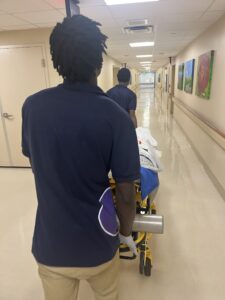
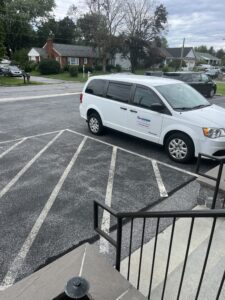
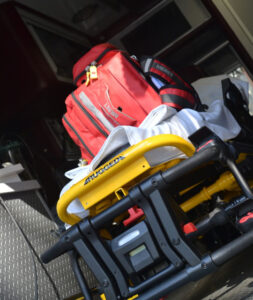
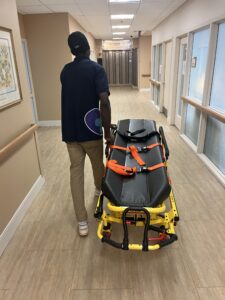
While the macro economics of medical logistics are transforming the broader industry, the true clinical impact is delivered locally—one vehicle, one driver, and one patient at a time. In Maryland, KM Comfort Carriers has established itself as the operational blueprint for how reliable, compassionate, comfortable and technologically synchronized medical transit should function.
Serving Montgomery County, Frederick County, Howard County, Carroll County, and its surrounding areas, KM Comfort Carriers operates under the philosophy that the transit experience is a direct extension of the clinical care ecosystem.
Rather than relying on outdated dispatch methods, the company utilizes a state of the art digital dispatch system that precalculates optimal routes and strategic buffer times. This precision completely removes the logistical friction that fuels patient travel anxiety. Furthermore, their drivers are uniquely trained to actively manage the sensory environment of the vehicle cabin, providing a calm, physically grounding atmosphere for passengers who may be feeling vulnerable or physically unwell.
Logistical Blueprint: How to Schedule a Ride
Securing professional medical transportation should never feel like an administrative burden for caregivers, patients, or hospital discharge planners. KM Comfort Carriers has streamlined the booking pipeline into a simple, efficient three step process:
Step 1: Consolidate the Essential Details
Before reaching out to schedule, ensure you have the following logistical pieces ready:
- The exact pickup address and specific building access instructions (e.g., specific facility doors or apartment numbers).
- The destination clinic details and the precise medical appointment time.
- The passenger’s specific mobility needs (e.g., ambulatory, wheelchair assistance, or specialized physical transfer requirements).
Step 2: Contact the Dispatch Team
Initiate your reservation through the communication channel that best aligns with your workflow:
- Phone: 301-658-4626
- Email: hello@kmcomfortcarriers.com
- Online Booking: Visit www.kmcomfortcarriers.com to access their digital reservation portal.
Step 3: Confirmation and Routing Integration
Once your details are logged, the digital dispatch system immediately integrates the trip, calculating the optimal route and establishing arrival windows to guarantee the patient arrives with plenty of time to spare. With the logistics fully secured, patients and families can divert 100% of their energy away from the road and entirely toward clinical recovery.
Source: kmcomfortcarriers.com